
PASIDERA · ARCHITECTURAL ANALYSIS
Solving the Puzzle of Sustainability in Higher Education Construction
As universities race to meet net-zero commitments, the Passive House standard is quietly rewriting the rules of academic building — shifting the conversation from energy certificates to energy physics.
By Pasidera Editorial · Architectural Analysis
In performance, commitment, and design ambition, the Passive House standard marks the future of construction in higher education. Universities across Europe and North America have spent the better part of two decades declaring carbon neutrality targets, publishing sustainability roadmaps, and certifying buildings to LEED or BREEAM. These are meaningful achievements. But a growing number of institutions are concluding that they do not go far enough — that what the sector actually needs is a construction standard defined not by points and checklists but by measurable, verifiable physics.
The Passive House standard — Passivhaus in its original German formulation — is exactly that. Originating from a 1988 collaboration between researcher Bo Adamson of Lund University and physicist Wolfgang Feist, and first applied in four terraced houses in Darmstadt-Kranichstein in 1991, it sets hard quantitative limits on heating and cooling demand, total primary energy use, and airtightness. Buildings that meet it are not merely efficient — they are, by design, incapable of being profligate. As of early 2025, the Passive House Institute had certified over 47,400 projects worldwide, representing more than 4.3 million square metres of treated floor area. In North America alone, PHIUS certified over 1.6 million square feet in 2024. The pipeline is accelerating.
The question this article addresses is specific: what does the Passive House standard mean for higher education, and why are universities — institutions with complex, energy-intensive, and operationally demanding buildings — increasingly turning to it as their benchmark of choice?
01 — THE STANDARD
What Passive House Actually Requires
The standard rests on five interlocking principles, each of which creates a distinct design constraint and a distinct design opportunity. Together, they produce buildings that rely on the physics of heat flow rather than the scale of mechanical plant.
PRINCIPLE | APPLICATION IN HIGHER EDUCATION |
Continuous Insulation | Eliminates thermal bridging across large academic floor plates — lecture halls, labs, and open-plan studios. |
Airtight Envelope | Verified by blower-door testing at n50 ≤ 0.6 h⁻¹; critical for buildings with high occupancy and variable internal loads. |
High-Performance Windows | Triple-glazed units with low-e coatings; whole-window U-values ≤ 0.80 W/m²·K reduce solar gain in south-facing seminar rooms. |
Heat-Recovery Ventilation | Balanced mechanical ventilation with ≥75% heat recovery; maintains indoor air quality for densely occupied classrooms. |
Minimal HVAC Systems | Reduced mechanical plant frees floor area and capital budget; operational energy savings typically reach 60–85% vs. code minimum. |
The five Passive House principles and their specific implications for academic building types.
What distinguishes the Passive House standard from LEED or BREEAM is not its ambition but its method of verification. LEED awards points for design intentions; Passive House demands performance evidence. Airtightness is not modeled — it is tested with a blower-door instrument once the building envelope is sealed. The Passive House Planning Package (PHPP), the standard’s energy modeling tool, requires inputs that are accurate enough to predict actual consumption within a narrow margin. When a building falls short at the test, it must be fixed before certification proceeds. This accountability gap — between what LEED predicts and what buildings actually consume — has driven many universities to look elsewhere.
“Energy and carbon are such paramount concerns that, in some cases, schools are choosing Passive House in place of LEED.” — BuildingGreen
02 — THE CAMPUS CHALLENGE
Why Universities Are a Particularly Hard Problem
Academic buildings present specific challenges that make the Passive House standard simultaneously harder to achieve and more valuable to pursue than in residential construction. Lecture theatres fill on Tuesday mornings and sit empty on Sunday afternoons. Laboratories run fume hoods around the clock regardless of occupancy. Research buildings require precise temperature and humidity control that conflicts directly with the standard’s preference for minimal mechanical intervention. Student residences demand ventilation rates that strain the heat-recovery systems on which the standard depends.
These are not theoretical obstacles — they are the reasons why, as one peer-reviewed study noted, there is still a limited number of university buildings designed to the Passivhaus standard, and only a few studies have assessed the standard’s adoption in this context. The Enterprise Centre at the University of East Anglia, one of the most carefully monitored university Passive House buildings in existence, met its primary energy requirement of 120 kWh/m² and its space cooling limit of 15 kWh/m² across four years of measured performance — but the study tracking its progress noted the difficulty of achieving the space heating target in years three and four as occupancy patterns shifted.
These complexities are real, but they are also instructive. Universities that have navigated them successfully report that the discipline of Passive House design produces buildings that perform more consistently, maintain occupant comfort more reliably, and carry lower operational costs over their lifecycle — all outcomes that matter significantly in institutions where buildings are expected to operate for 50 years or more.
03 — CASE STUDIES
From Theory to Campus
The University of Southern Maine’s Portland Commons Residence Hall is perhaps the most cited North American example of Passive House at an academic scale. At 218,000 square feet and 580 beds, the student housing project was designed to Passive House certification and is projected to consume 50 percent less energy than a comparable code-compliant structure — making it, at completion, the second-largest academic Passive House building in the United States. The design team, working with Capstone Development Partners and architect Elkus Manfredi, reported that the additional cost premium over a standard Energy Star baseline was in the range of zero to three percent — a figure substantially lower than the premiums associated with early Passive House residential projects, reflecting the maturation of the supply chain.
In the United Kingdom, the University of Leicester’s Centre for Medicine holds the distinction of being the largest commercial Passivhaus building in the country. Scotland has been particularly active, with a series of educational Passive House projects funded through an innovative mechanism from the Scottish Futures Trust. Across the UK, over 43 schools and educational schemes were under construction or awaiting certification as of mid-2024 — a pipeline that represents a sector-wide shift rather than a collection of individual experiments.
In architecture, the University of Canterbury’s Mathematics, Statistics and Computer Science building in New Zealand demonstrates how passive solar design — a set of strategies closely allied with, though distinct from, the full Passive House standard — can be integrated into a large academic facility without compromising the spatial qualities that make academic buildings effective places of work and study. Its five-storey atrium, natural ventilation systems, and thermal mass strategy show that performance and pedagogy can share the same floor plan.
04 — THE BU PARALLEL
What the Jenga Building Teaches About Passive Principles
Boston University’s Center for Computing & Data Sciences — the building colloquially known as the Jenga Building for its cantilevered, staggered massing — is not a Passive House building. It is LEED Platinum certified and the largest fossil-fuel-free building in Boston, powered by 31 geothermal wells drilled 1,500 feet into the bedrock beneath Commonwealth Avenue. But it illustrates, with unusual clarity, the central argument of the Passive House philosophy applied at an institutional scale: that the most durable sustainability gains are not achieved by bolting renewable systems onto conventional envelopes, but by designing the building itself to minimize demand before any mechanical or electrical system is engaged.
The CDS’s louver system — the diagonal fins that give the façade its linear texture — is calibrated to the site’s solar geometry, shading the interior in summer and admitting winter light. The eight green terraces created by the rotating cantilever strategy serve as green roofs that manage rainwater and reduce the urban heat island effect around the building’s upper floors. The celebrated interior staircase, designed to be too visually compelling to ignore, reduces elevator demand across 19 floors. None of these are Passive House measures in the technical sense — but all of them reflect the passive thinking that underpins the standard: reduce demand through design intelligence before reaching for mechanical solutions.
“In energy efficiency, carbon reduction, and architectural discipline, Passive House marks the clearest path forward for higher education construction.”
05 — THE PATH FORWARD
From Commitment to Construction
The trajectory is clear. Universities that have made net-zero commitments — and there are now hundreds of them, across every continent — face a structural problem: they cannot stop building, yet every new building they construct adds operational carbon to their portfolio. LEED and BREEAM provide a framework for managing that addition. Passive House provides a framework for nearly eliminating it.
The cost argument, once the primary objection to Passive House in institutional settings, is weakening. As supply chains for triple-glazed windows, airtight membranes, and heat-recovery ventilation units have matured, the reported premium over standard code construction has fallen to the five to ten percent range in established markets — and, as the Portland Commons project demonstrated, can approach zero when procurement is managed carefully. Against that upfront cost, institutions must weigh operational savings that, according to PHIUS, typically reach 60 to 85 percent compared to code-minimum buildings.
The more significant shift, however, is cultural. Passive House requires a degree of design discipline and cross-disciplinary collaboration — between architects, structural engineers, mechanical engineers, and building physicists — that is unusual in institutional procurement. It requires decisions to be made early and held to. It requires contractors to treat airtightness as a structural requirement rather than a finishing detail. These demands are, in effect, a proxy for the quality of thinking that goes into a building. Universities that have adopted the standard report that it changes not just the energy performance of their buildings but the way their design teams think about the relationship between form, fabric, and function.
That is the deepest argument for Passive House in higher education — not the certificate at the end of the process, but the intellectual rigor that the process demands. Universities exist to take hard problems seriously. In the sustainability, construction, and design discipline, the Passive House standard asks nothing less of the buildings they build.
Pasidera · Sources: Passive House Institute (PHI), PHIUS 2024 Annual Report, BuildingGreen Campus Case Studies, University of East Anglia TEC Performance Study, Cascade Built / USM Portland Commons documentation, Passivhaus Trust UK Educational Database 2024, Wikipedia Passive House (January 2025).
"LEED tells you what a building was designed to do. Passive House tells you what it actually does. In an era defined by the gap between climate commitments and climate outcomes, only one of those answers is worth giving."


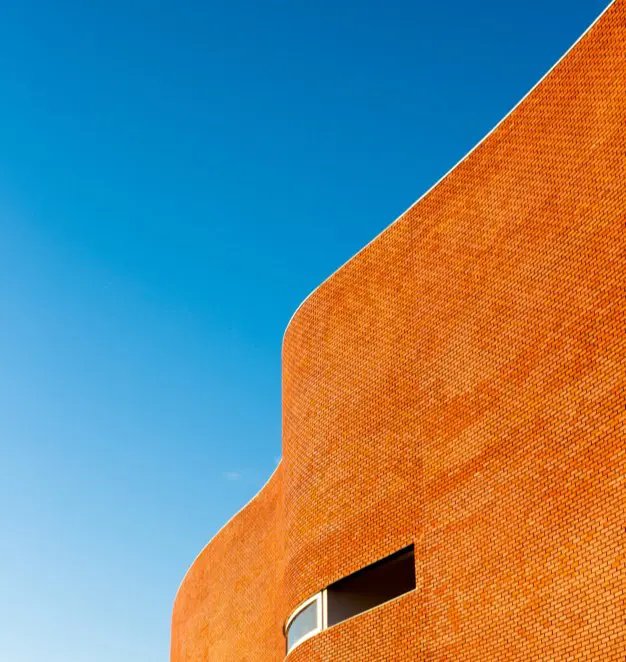
It has a much better R-value for insulation than the previous exterior wall – and it looks beautiful.